We’ve been building up to this in our series. There is a lo we can write about, but we’ll try to be concise. Philadelphia, the largest city in Pennsylvania, serves as an economic powerhouse driven by finance, healthcare, education, tech innovation, and logistics. As one of the nation’s oldest urban centers, Philly also blends historical significance with modern industry, making it a competitive landscape for businesses of all sizes.
What We'll Cover
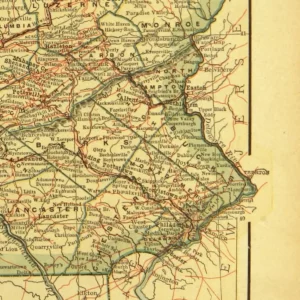
Where is Philadelphia?
Philadelphia is not just Pennsylvania’s largest city, it’s one of the oldest, most iconic urban centers in the U.S. With a population of over 1.5 million just within city limits, and a legacy spanning centuries of American history, the city plays a critical role in the state’s political, economic, and cultural landscape. While the metro area is vast, this analysis focuses on Philadelphia itself: its core neighborhoods, commercial corridors, and evolving economy.
Philadelphia is served by multiple interstates (I-76, I-95, I-676), SEPTA’s extensive transit network, and Amtrak’s Northeast Corridor line. Philadelphia International Airport connects the city globally, while its port and freight rail systems play a key role in East Coast logistics. The city’s diverse neighborhoods ranging from high-density University City and Center City to lower-density Fishtown and South Philly. Even walking the city for a few minutes you’ll experience the wide range of economic activity and business opportunity.
What is SWOT?
We’ll use SWOT to understand the business climate a little better. A SWOT analysis (SWOT an acronym for “Strengths, Weaknesses, Opportunities, Threats”) helps identify the factors that can affect the success of a business or project. Broadly speaking, strengths and opportunities are internal and external positive factors, respectively. Conversely, weaknesses and threats are internal and external negative factors. We discuss more in detail how to use this technique on your website here.
Strengths
The internal factors that give the business or project an advantage over its competitors.
Weaknesses
The internal factors that put the business or project at a disadvantage.
Opportunities
The external factors that could be used to the advantage of the business or project.
Threats
The external factors that could cause damage to the business or project.
An effective SWOT Analysis is just the first step in forming a strategy. The next step is to leverage strengths, overcome weaknesses, take advantage of opportunities, and mitigate threats. It is often used as a starting point for strategic planning and decision-making.
Analysis of Philadelphia’s Business Environment
Strengths
Major Economic and Cultural Hub: Philadelphia is a national center for education, healthcare, life sciences, law, finance, and creative industries. Its proximity to New York and D.C., large consumer base, and legacy institutions make it a top-tier environment for entrepreneurship and innovation. Take any of the strengths we’ve covered for Bucks County and amplify them to get an idea of Philly proper.
This isn’t a city where residents pine for someplace else to live. Lean into the landmarks and local pride in your online messaging.
Highly Educated Workforce: With over 100 degree-granting institutions in the metro area and major research universities within city limits (Penn, Drexel, Temple), Philadelphia draws and retains talent in medicine, law, engineering, and business.
If your business recruits talent or works in education, health, or tech, use your website to highlight thought leadership, case studies, or internship/career pipelines. Regular blog content or downloadable white papers can position your company as a credible player in these sectors.
Infrastructure and Transit Access: SEPTA’s subway, trolley, and bus systems offer extensive transit access within the city, even compared to other major metros in the US. Major rail and highway corridors, the port, and an international airport add to its multi-modal appeal, particularly for firms requiring broad physical access.
Make sure your site clearly communicates location details, transit access, storefront hours, and integrates Google Maps or transit-friendly directions. Consider local delivery or pickup landing pages for walk-able service areas.
Weaknesses
High Tax Burden and Business Costs: Philadelphia’s wage tax and business income taxes can be burdensome for small and mid-sized businesses compared to suburbs or smaller cities in the region. This remains a consistent complaint in local business surveys.
Poverty and Economic Inequality: Despite growth in sectors like healthcare and biotech, Philadelphia continues to have one of the highest poverty rates among major U.S. cities. This creates challenges in local consumer spending and limits workforce stability in certain neighborhoods.
This means not everyone has the latest iPhone or fastest broadband. Leverage responsive web design and optimize your website for speed.
Fragmented Regulatory Environment: Licensing, zoning, and permitting in Philadelphia can be slow and bureaucratic, especially for brick-and-mortar businesses. Navigating city services often requires time, insider knowledge, or third-party help.
Opportunities
Innovation Districts and Tech Growth: Neighborhoods like University City and the Navy Yard are hubs for innovation in biotech, healthcare, AI, and green tech. These clusters offer incentives, co-working spaces, and capital for high-growth startups and established firms alike. For one example, the first (and presently only) use of driver-less vehicles is in the Navy Yard.
Neighborhood Revitalization: Gentrification and redevelopment in neighborhoods like Brewerytown, Point Breeze, and Kensington are reshaping the urban fabric (sometimes controversially). This is largely driven by the nearby universities and waterfront, along busier travel corridors. With the right community partnerships, businesses can grow alongside new housing and retail developments.
Rise with the tide and use local SEO best practices to be the first in line for these audiences.
Localism and Identity-Based Branding: Philadelphia has always maintained a unique culture, but it’s proud, distinct cultural identity has become almost a meme elsewhere in the US. This also means consumers often prefer to support local businesses. From “Made in Philly” products to neighborhood-centric brands, this ethos offers opportunities for storytelling and loyalty-building.
This doesn’t just apply to marketing in the city itself. Philly is becoming a cultural brand in its own right, and may appeal to audiences outside the city.
Threats
Crime and Public Safety Perceptions: Philadelphia has seen spikes in certain types of crime in recent years. Each year you’ll notice double digit declines in one form but similar increases in another. Even when data is improving, perceptions of safety can deter tourism, foot traffic, and retail activity in some areas.
If you’re located in the city, these perceptions (whether real or unfounded) are working against your business. Highlight safety, professionalism, and trust on your website. Help people unfamiliar with your area feel at ease and confident in doing business with you.
Commercial Real Estate Volatility: Like many cities, Philadelphia’s downtown faces uncertain demand for office space post-pandemic. This affects surrounding small businesses that depended on office worker foot traffic.
Inter-Metro Competition: Philadelphia competes with nearby metros (NYC, DC, Baltimore) for tech talent, corporate relocation, and venture capital. For certain sectors like finance, firms may still view Philadelphia as a secondary or mid-tier market. The city has recently leaned into its strengths but needs to define its advantages clearly.
Philly ‘Phriendly’ Considerations
Philadelphia is a complex, opportunity-rich environment for businesses of all sizes. Its strengths (scale, talent, culture, and infrastructure) are tempered by systemic challenges, including inequality, regulatory burdens, and shifting urban dynamics. Strategic planning in Philadelphia often means balancing city-wide opportunities with neighborhood-specific conditions.
Small businesses can thrive here if they understand their hyper-local market and build strong digital foundations to reach both neighbors and out-of-town customers. Industries like healthcare, logistics, and tech have strong pipelines for workforce and funding. For others, success often depends on effective positioning and access to community resources and business support networks.